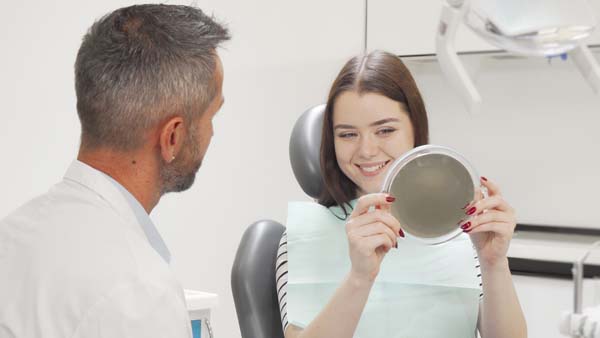
Dental bonding is one of the most highly recommended methods of repairing damaged teeth. It is a low cost and minimally invasive procedure and can restore the appearance of your smile. Learning about the benefits and process of dental bonding can help you decide if treatment is right for you.
A review of dental bonding for damaged teeth restoration
This review details what dental bonding is, the types of teeth damage that it can fix, and what to expect throughout the treatment process. There are other treatment options available as well, but many dentists recommend dental bonding for patients who want a simple, fast, and effective solution to chips, cracks, and other types of teeth damage.
What is dental bonding?
Dental bonding is a common cosmetic dental procedure in which composite resin is applied to a tooth (or multiple teeth) and hardened with a special dental light. The composite resin has the same color as natural teeth, providing the patient with a beautiful and natural-looking finish. Since dental bonding is applied by the dentist, it is a flexible treatment option that can fix a range of concerns.
What issues can dental bonding fix?
There are many reasons that a dentist might recommend dental bonding. The most notable issues that dental bonding can fix include the following:
- Chips
- Cracks
- Stains
- Misshapen teeth
- Short teeth
- Worn-down teeth
- Gaps
Dental bonding is most commonly used for minor imperfections, while more severe concerns and issues that deal more with oral health may require more extensive treatment.
How dental bonding fixes damaged teeth
As it relates specifically to repairing damaged teeth, dental bonding can cover teeth that are damaged by chips and cracks. They can also repair teeth that are damaged as a result of grinding teeth (bruxism) or severely stained teeth. The process for dental bonding involves applying the composite resin material in a strategic manner, hardening the composite resin with a dental light or laser, and smoothing and polishing the tooth.
Alternative restoration solutions for damaged teeth
More extensive treatment may be necessary for severe damage to teeth. Many issues that cannot be repaired by dental bonding can be repaired by dental veneers, orthodontic treatment, or dental crowns. In some instances, teeth replacement may be necessary if the teeth that are damaged cannot be saved.
What to expect in the long term with dental bonding
Dental bonding does not require much of a recovery, and the patient can return to their normal routine after treatment. To keep your new and beautiful teeth looking great for the long term, patients can care for them by brushing, flossing, and using mouthwash regularly, along with limiting the consumption of sugar and visiting the dentist regularly.
Talk to a dental professional about dental bonding
Dental bonding is a great way to restore the appearance of your smile after damage occurs to your teeth. To learn more about dental bonding, contact our office, and speak with one of our dental professionals during a convenient consultation visit.
Request an appointment here: https://gardensdentist.com or call Quasha Dentistry at (561) 220-0225 for an appointment in our Palm Beach Gardens office.
Check out what others are saying about our dental services on Yelp: Dental Bonding in Palm Beach Gardens, FL.
Related Posts
Dental bonding is a practical way to refresh a smile without extensive dental work. This approach helps address small cosmetic and functional concerns with a tooth-colored resin that blends with natural enamel. A general dentist often recommends it for patients seeking noticeable improvement with a conservative approach. Dental bonding also helps to protect teeth and…
Many patients are nervous before a dental bonding procedure, although the procedure itself is non-invasive, only takes one dental visit and does not require any anesthesia. You can prepare yourself mentally and physically for the procedure, however, by knowing what to expect, how to prepare and what to plan for after the procedure. The following details…
You are probably familiar with dental bonding as a way to repair cosmetic tooth concerns. The dentist will also use this to treat and repair cavities and other common dental health problems. There are many reasons why this approach is so common among patients of all ages. Before getting this treatment, your dentist will discuss…
Getting dental bonding can be a good way to improve your smile. It can be hard to know the right time to get it, however. The right way to determine if you are a candidate for it is to have an appointment with your dentist. Keep reading to find out more about a few cosmetic…