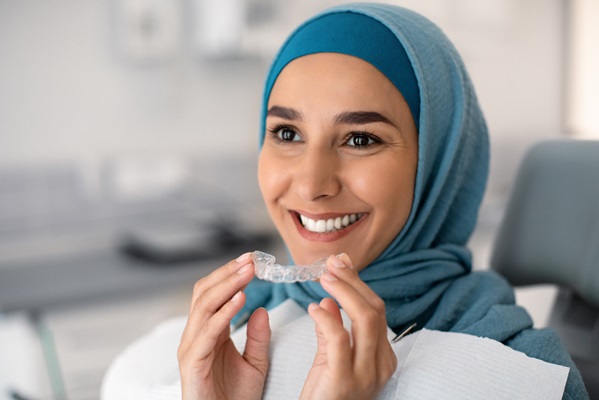
If your child has extensive dental malalignment, Invisalign® for teens may not be appropriate. However, if the malalignment is relatively mild, you and your child may have the option of choosing between clear aligners and traditional braces. Comparing and contrasting the two treatments can help you decide which would most benefit your teen.
How are braces and Invisalign® for teens similar?
There are few similarities between braces and clear aligners, but understanding how they are similar can help you make an informed decision.
Cost
Generally, traditional braces and clear aligners fall into the same price range. However, the specific costs depend on individual factors, such as the extent of the malalignment.
Effectiveness
For patients who are candidates for Invisalign®, the two treatments are equally effective. However, clear aligners do not apply enough pressure on the teeth to correct severe cases of malalignment.
How are braces and Invisalign® for teens different?
While the end result may be similar, Invisalign® and braces are different in many ways.
Materials
Traditional braces are made of metal wires attached to brackets that adhere directly to your child's teeth. The brackets may be made of ceramic, but metal components are always. Invisalign® aligners are made entirely of plastic molded to the teeth for a snug fit.
Aesthetics
Traditional braces tend to be noticeable. Ceramic brackets may be clear or tooth-colored to be less obvious, especially at a distance, but from close up, other people will probably realize that they are there. On the other hand, invisalign® trays are made out of transparent material. Because they are molded precisely to the teeth, it is almost impossible for other people to see them unless they are looking for them specifically.
Removability
Braces are stuck on a patient's teeth and cannot be removed except by a provider. While effective treatment with clear aligners requires them to be worn for most of the day, they are taken out for eating and cleaning.
Hygiene
Maintaining good oral hygiene is at least as important for patients receiving treatment with braces or Invisalign® than for those who are not. Brushing and flossing are more difficult with braces because getting around and under the wires and brackets is challenging. With Invisalign®, brushing and flossing are no more difficult than without because the aligners are removed for dental hygiene. However, it is imperative that your child brush their teeth after every meal and perform the extra step of cleaning the aligners.
Comfort
The metal components required for traditional braces can irritate the soft tissues in your teen's mouth, including the tongue and inside of the lips. Because clear aligners are made of smooth plastic with no metal components, they cause little to no irritation and are generally more comfortable to wear. However, they can cause some tenderness of the teeth when your teen first receives each new set of aligners, comparable to what your teen would experience after adjusting their traditional braces.
Conclusion
While there are some superficial similarities between braces and Invisalign® for teens, there are many more differences. However, both can be effective for patients who are candidates.
Request an appointment here: https://gardensdentist.com or call Quasha Dentistry at (561) 220-0225 for an appointment in our Palm Beach Gardens office.
Check out what others are saying about our dental services on Yelp: Invisalign in Palm Beach Gardens, FL.
Related Posts
Regular visits to a dental practice provide essential care for achieving and maintaining optimal oral health throughout a patient’s lifetime. Beyond treating immediate dental concerns, a dental practice emphasizes preventive care, patient education, and tailored treatments designed to safeguard oral health for years to come. Understanding the role of professional dental care underscores the importance…
TMJ treatment can reduce jaw pain, clicking, and tight facial muscles by addressing the habits, inflammation, and joint mechanics that drive discomfort. Many cases improve with conservative care that supports healthier jaw movement and lowers strain on the temporomandibular joints, while others may require professional care from a general dentist. Regardless, early intervention helps prevent…
Scheduling an initial visit to a dental practice marks the first step toward maintaining optimal oral health. Proper preparation for this appointment ensures a seamless experience, allowing the dental team to provide the highest-quality care possible. Understanding what documents and information to bring facilitates efficient care, reduces stress, and helps patients feel comfortable and informed…
Seeking timely gum disease treatment can reverse the early effects of tissue inflammation before permanent damage compromises the foundational structures of the mouth. The initial phase of gum disease, known as gingivitis, develops quietly without causing significant physical pain or obvious distress to the patient. Our general dentist identifies these subtle tissue changes during routine…