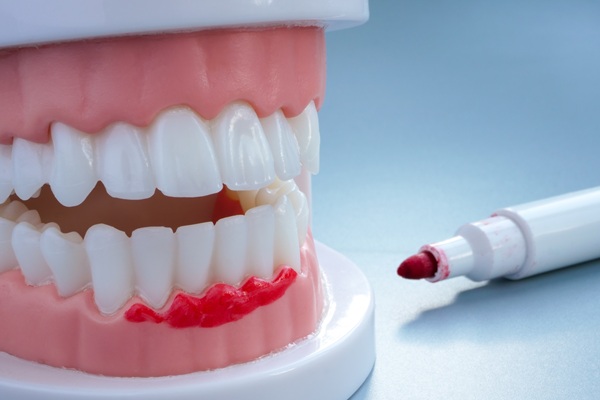
Gingivitis is a form of gum disease that causes swelling where the gums meet the teeth. It is a serious condition that should be treated as soon as possible. Early diagnosis and treatment can prevent further oral health issues, including oral functions, loose teeth, and potential tooth loss.
Causes and symptoms of gingivitis
Gingivitis can occur when plaque is not properly removed and starts to build up on teeth. Over time, the sticky film can harden into a substance known as tartar, which can only be removed during a professional cleaning by a dentist or dental hygienist.
Common symptoms of gingivitis include bleeding or swollen gums, persistent bad breath, receding gums, and sensitive teeth. When experiencing these symptoms, it is important to see a dental professional immediately. Gingivitis must be treated to prevent further decay of the teeth and the risk of gum infection. When left unaddressed, it can also lead to other health issues.
Treating gingivitis
Fortunately, treating gingivitis can reverse symptoms, though it cannot restore damage to the bone that has already occurred. The typical treatment plan includes cleaning, dental restoration, and ongoing care.
Professional cleaning
The professional cleaning removes any tartar and plaque that has built up on the teeth. This is accomplished by scaling and root planing. Scaling removes tartar and bacteria, while root planing smooths root surfaces and removes bacterial products causing inflammation. To perform these tasks, the professional may use a laser or ultrasonic device.
Restoration
If restoration is advised, any issues that make caring for the teeth more difficult can be corrected. This includes straightening teeth and replacing crowns and other dental fixtures.
Preventing future gum infection
Gingivitis is preventable. There are many factors that contribute to the condition, and knowing the causes can help stop future episodes of gum disease. These preventative measures and habits to avoid can maintain good gum health:
- Brush teeth at least two times a day
- Floss teeth at least once a day
- Avoid smoking and other tobacco products
- Use an electric toothbrush with soft bristles for a better cleaning
- Avoid overconsumption of sugary and acidic food and drinks
- Replace toothbrushes or electric toothbrush heads every three months
- Schedule a regular dental checkup once a year
Using mouthwash can reduce bacteria and keep breath smelling good. A natural mouthwash that can be made at home is a saltwater rinse. Because salt is a natural disinfectant, it can help heal gums that have become inflamed. It may also reduce the amount of bacteria in the mouth.
Schedule your next dental visit to prevent gingivitis
Gingivitis is a preventable oral health condition. By following a thorough oral health routine and avoiding the overuse of sugar and tobacco products, your teeth and gums are more likely to stay healthy. If you have been experiencing bleeding or swollen gums, you should make an appointment with a dental professional as soon as possible to prevent further health issues. Call our Palm Beach Gardens office to learn more or schedule your next visit.
Request an appointment here: https://gardensdentist.com or call Quasha Dentistry at (561) 220-0225 for an appointment in our Palm Beach Gardens office.
Check out what others are saying about our dental services on Yelp: Gum Disease in Palm Beach Gardens, FL.
Related Posts
A cosmetic dentist can address many common smile concerns by combining careful planning with treatments designed to improve balance, color, shape, and overall appearance. While some issues seem minor at first, they can affect confidence, oral function, and the way a smile ages over time. Understanding which conditions our dentist can treat helps patients choose…
Dental crowns are a type of restoration that can last between 5 and 15 years depending on the material chosen and the quality of care they receive. However, crowns may not provide the long-term durability patients desire if they are not cared for properly through good oral hygiene and protecting them from damage.You can protect…
Dental cleanings from a general dentist are a routine part of oral care for anyone who wants a healthy, beautiful smile. Typically, they are most effective when done at least every six months. To better understand why dentists recommend cleanings so frequently, it can help to learn the process and benefits of these preventive dental…
Finding out that you need a tooth extraction can feel like a setback, but it is often the first step toward a much healthier life. We want you to feel completely at ease with the process, knowing that this decision is made only when it is the best way to protect your long-term oral health…