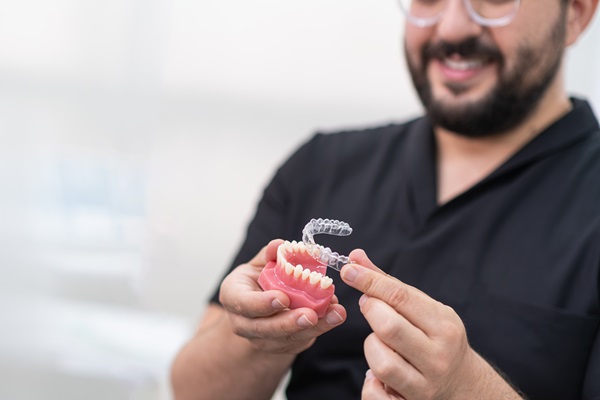
Clear aligners are a discreet way of straightening the teeth. Patients will wear them for 22 hours or more every day. These only come out for cleaning or eating and drinking something other than water. The patient will get a new set of aligners every couple of weeks, and each moves the teeth a bit more. The teeth will eventually be in the correct position.
Issues to correct
The patient will visit a dentist offering clear aligners to see if that is the right option. But the aligners are suitable for straightening crooked teeth to provide a better smile. These can also correct overbites, which happen when the upper teeth overlap the lower ones. That can cause problems with biting and chewing. The good news is that the clear aligners can help the lower and upper teeth fit correctly.
An underbite is the opposite of an overbite. It happens when the lower teeth are in front of the upper ones. If there is an underbite, the teeth might begin to wear down too quickly, and that might affect the patient’s speech. The dentist can use clear aligners to move the lower teeth back a bit. That way, the teeth will sit behind the upper ones correctly.
Open bites are another orthodontic issue. That means the lower and upper teeth do not meet. That can be caused by tongue thrusting or thumb-sucking. The dentist can use clear aligners to move the lower and upper teeth in the correct location.
Other oral issues
Patients might have spacing issues, including gaps between the teeth. That means there is too much room in the mouth. The food might become stuck in these gaps, leading to gum disease and cleaning issues. Closing those gaps can lead to better oral health and a prettier smile.
The opposite of gaps is crowding. It might happen because there is not enough space in the patient’s jaw. It causes the teeth to twist or overlap. If there is not enough space between the teeth, then food could be even harder to get out from there. That leads to plaque and tartar accumulation, leading to gum disease.
Are there any limitations?
Clear aligners can fix a wide range of issues. However, sometimes the dentist will need to use other methods to help the treatment work well. Highly complex cases might require some additional help. That includes:
- The shape of the teeth, like pegged or round ones
- Tooth position, such as a highly rotated tooth
- Teeth that need to be lowered or raised
- Large gaps
- Previous dental work, such as bridges or crowns in the mouth
Choose the right clear aligners today
The cost of the treatment will depend on your specific orthodontic issues. The dentist can do an exam and help you decide if you are the right candidate for the procedure. You can get more information from them. Making an appointment with your dentist today is your first step.
Request an appointment here: https://gardensdentist.com or call Quasha Dentistry at (561) 220-0225 for an appointment in our Palm Beach Gardens office.
Check out what others are saying about our dental services on Yelp: Clear Aligners in Palm Beach Gardens, FL.
Related Posts
Clear aligners offer a discreet way to straighten teeth, but traditional braces remain a powerful option for many complex bite and alignment concerns that require constant, steady force. Choosing between these methods is less about which option is better and more about which one fits daily habits, comfort needs, and long-term goals. Understanding how each…
Patients are often excited to have orthodontic work, such as clear aligners. Wearing regular braces might not be the right option for some people because of the discomfort. The good news is that issues like gaps are easy to address with clear aligners. The patient can easily have the teeth straightened, improving their appearance and…
Regular visits to a dental practice provide essential care for achieving and maintaining optimal oral health throughout a patient’s lifetime. Beyond treating immediate dental concerns, a dental practice emphasizes preventive care, patient education, and tailored treatments designed to safeguard oral health for years to come. Understanding the role of professional dental care underscores the importance…
TMJ treatment can reduce jaw pain, clicking, and tight facial muscles by addressing the habits, inflammation, and joint mechanics that drive discomfort. Many cases improve with conservative care that supports healthier jaw movement and lowers strain on the temporomandibular joints, while others may require professional care from a general dentist. Regardless, early intervention helps prevent…